Iceland guide
The Northern Lights in Iceland
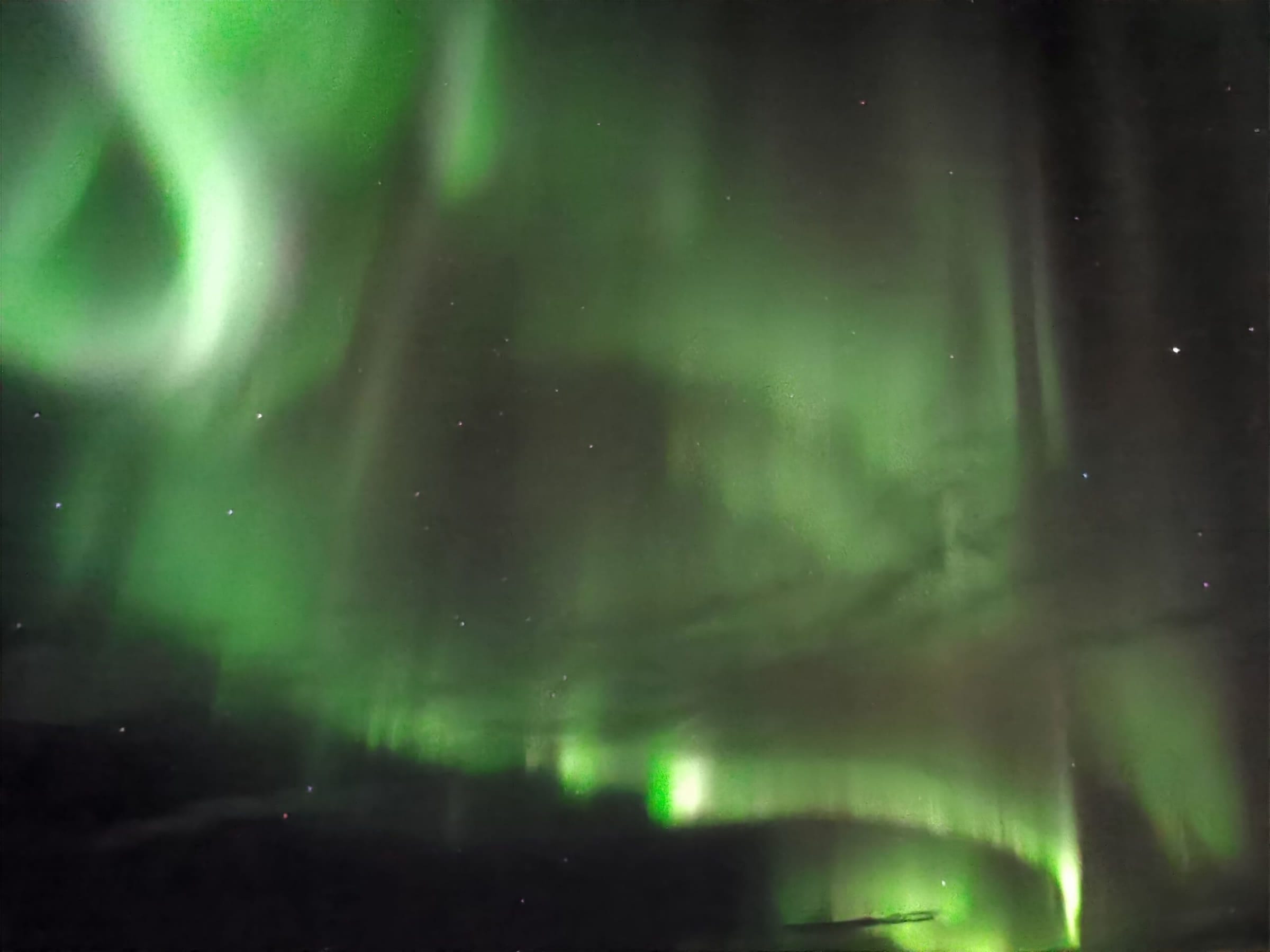
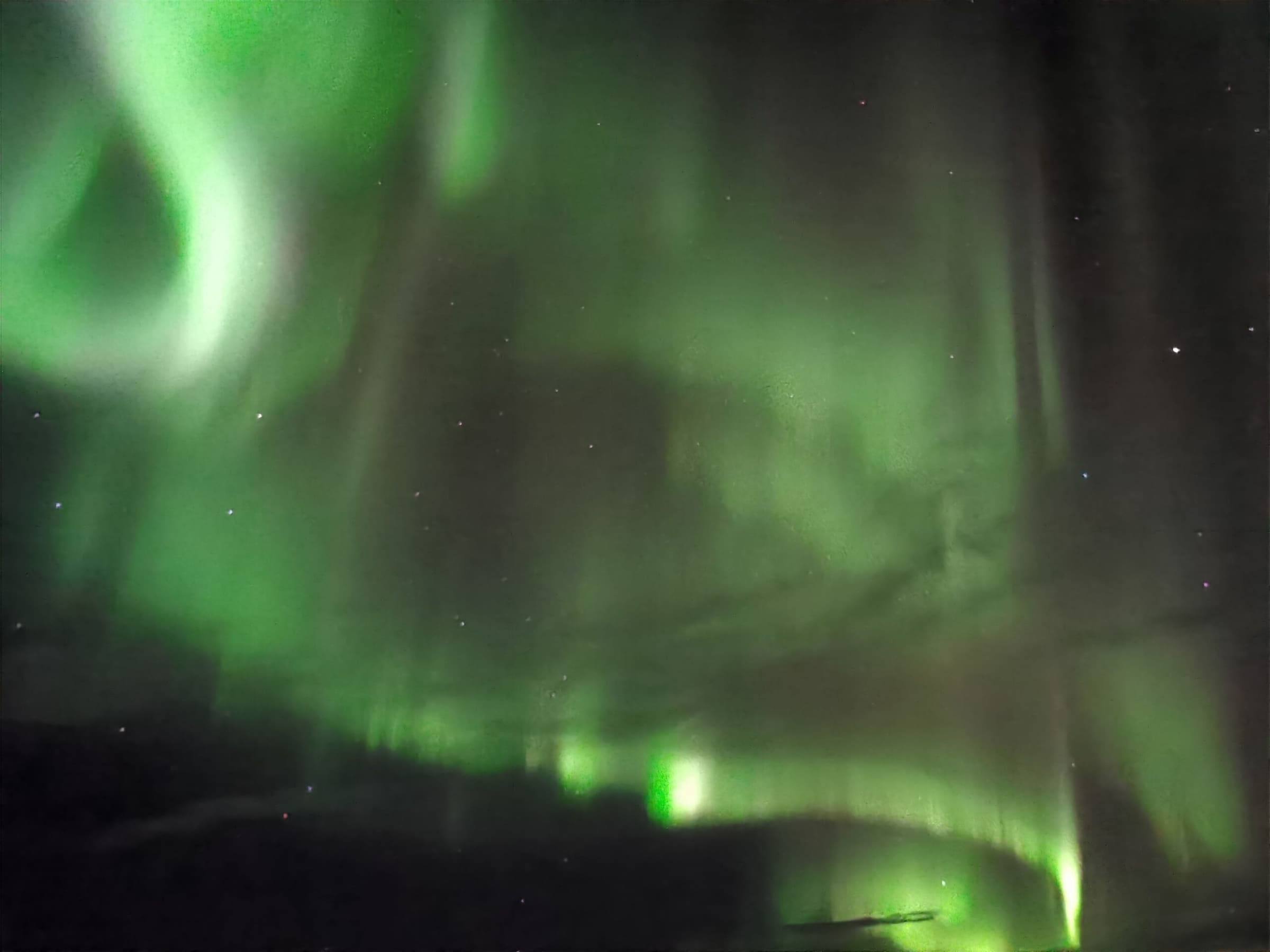
You can see the northern lights in Iceland from September to April. It takes three things on the same night: a dark sky, a clear sky and activity from the sun. Here is how each month compares, how to read the forecast, where to go from Reykjavík and how to photograph them when they show.
At a glance
- Season
- September to mid-April
- Best hours
- Any time it is fully dark, often 22:00–02:00
- You need
- Darkness, a clear sky and solar activity
- Forecast
- Icelandic Met Office, cloud cover and activity
- Guaranteed?
- Never. More nights mean more chances.
When can you see the northern lights in Iceland?
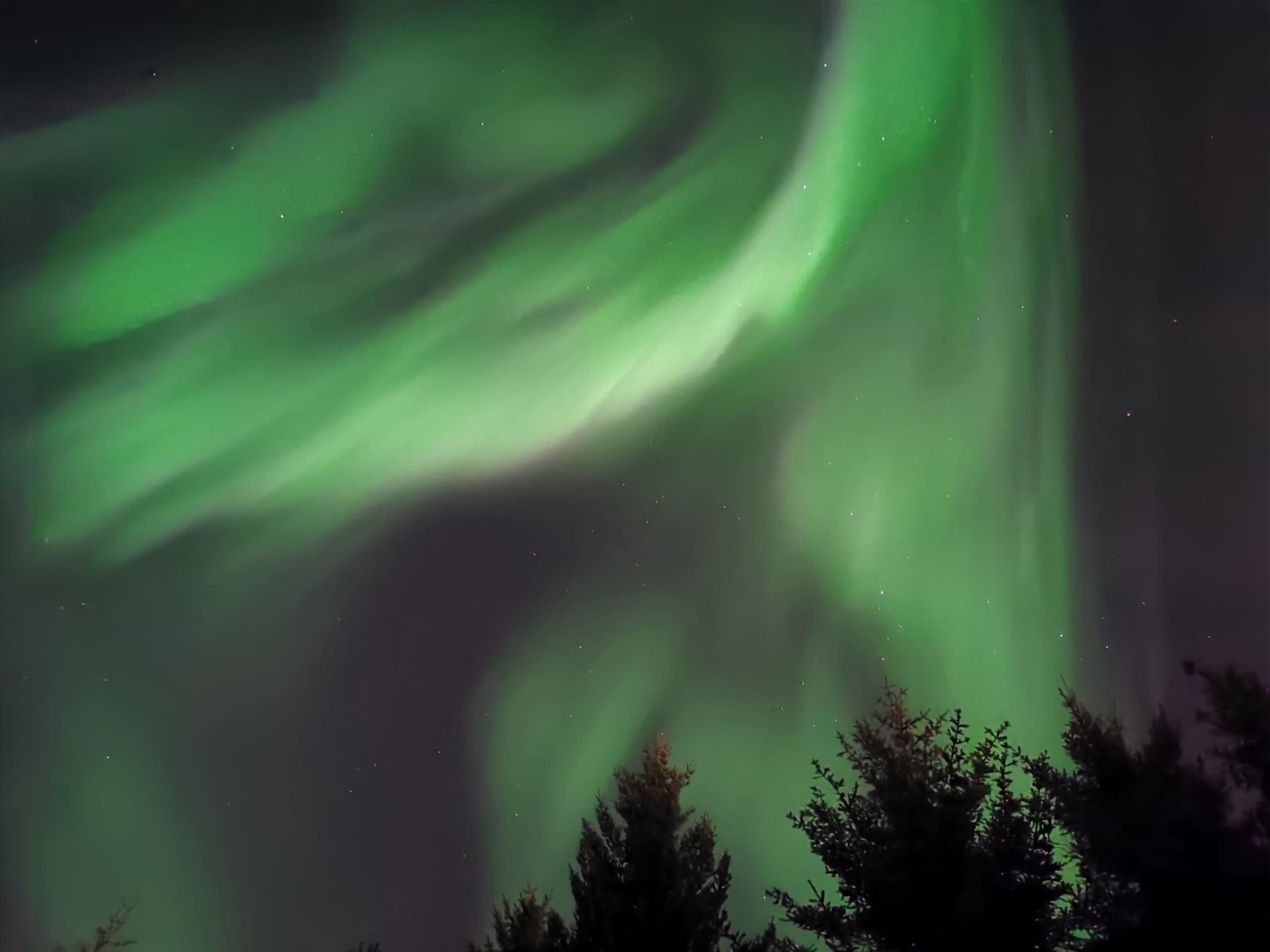
The season runs from September to April. From mid-May to early August the sky never gets properly dark in Iceland, so even a strong display can’t be seen. The rest of the year it depends on the night, not the month: the sky has to be dark, it has to be clear, and there has to be activity, caused by charged particles from the sun hitting the earth’s magnetic field.
Iceland sits right under the auroral oval, the ring around the magnetic pole where the lights are most often overhead. That means the activity is there on most dark nights. In practice the thing that decides whether you see them is the cloud.
The sun passed the peak of its eleven-year cycle around late 2024, and the years just after a peak tend to bring some of the strongest displays.
Northern lights in Iceland, month by month
There is no single best month. The darkest months give the most hours to look; the shoulder months often bring milder weather and some of the most active skies.
September
Dark nights come back. The lights usually start after 22:00, the weather is mild, and around the equinox late in the month geomagnetic activity tends to rise.
October
Longer nights and autumn colours, before the winter storms set in. A good balance of darkness and comfortable temperatures.
November
Long nights and the first snow. The weather gets more changeable, so flexibility pays.
December
The longest nights of the year, with only four to five hours of daylight around the solstice. Plenty of time to look; storms can close in for days.
January
Still very long nights and the coldest weather. Cold, clear high-pressure spells are often the best aurora nights of the winter.
February
Long nights, more daylight for sightseeing, and a snowy landscape under the lights.
March
Nights still long enough, days longer and brighter, and activity tends to rise again around the spring equinox.
April
Nights shorten quickly. The first half of the month still gives a chance; by the end it is too light.
Reading the northern lights forecast
The Icelandic Met Office aurora forecast shows two things on one map: the cloud cover hour by hour, and the expected activity on a scale of 0 to 9. Look at the clouds first. A clear patch an hour’s drive away beats a strong forecast over a covered sky.
Activity is often given as the Kp index. Because Iceland is so close to the auroral oval, even a Kp of 2 or 3 can give a good display here when the sky is clear. Higher numbers mean brighter, faster lights that spread further across the sky.
The weather here changes fast, and cloud can open and close within the hour. That is why the best way to see the lights is in a vehicle that can go to where the sky is clear and dark, rather than at a fixed spot.
Where to see the northern lights near Reykjavík
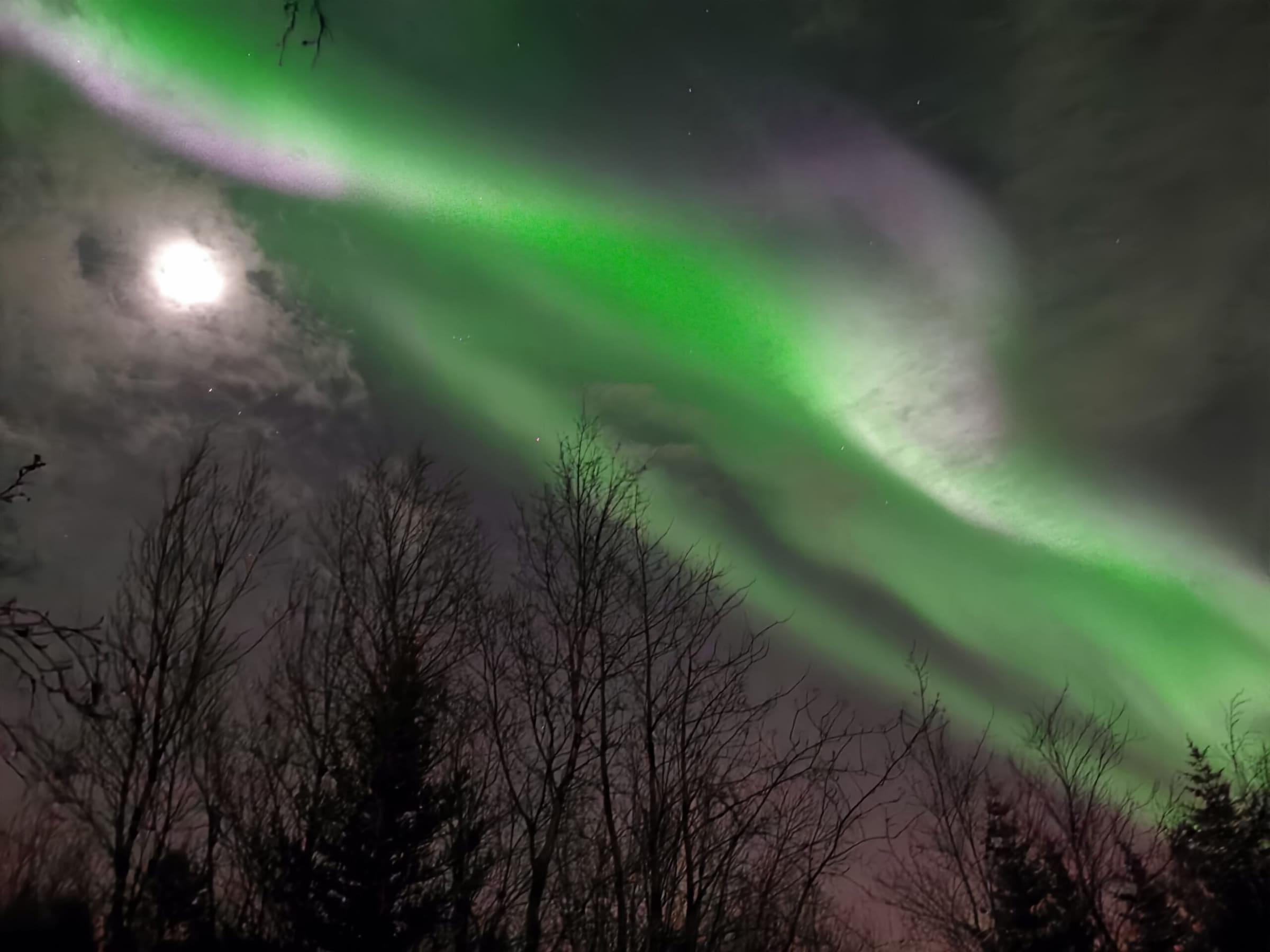
On a strong night you can see the lights from Reykjavík itself, at the Grótta lighthouse on the western tip of the city. Faint displays are washed out by the city lights, so a 30 to 60 minute drive into the dark makes a big difference.
Thingvellir National Park, the first stop on the Golden Circle, is dark, open and less than an hour away. The Reykjanes peninsula, between the city and the airport, has lava fields, lakes and a long coast with almost no lights. Which way to go depends on where the cloud is.
A full moon brightens the sky and hides the faintest lights, but a good display still shows, and the moon lights up the landscape beneath it.
How to photograph the northern lights
Use a tripod, turn off the flash and set the camera to manual. A good place to start is the widest aperture your lens has, ISO 1600 to 3200 and an exposure of 5 to 15 seconds: shorter when the lights move fast, longer when they are faint. Focus manually on a bright star or a distant light.
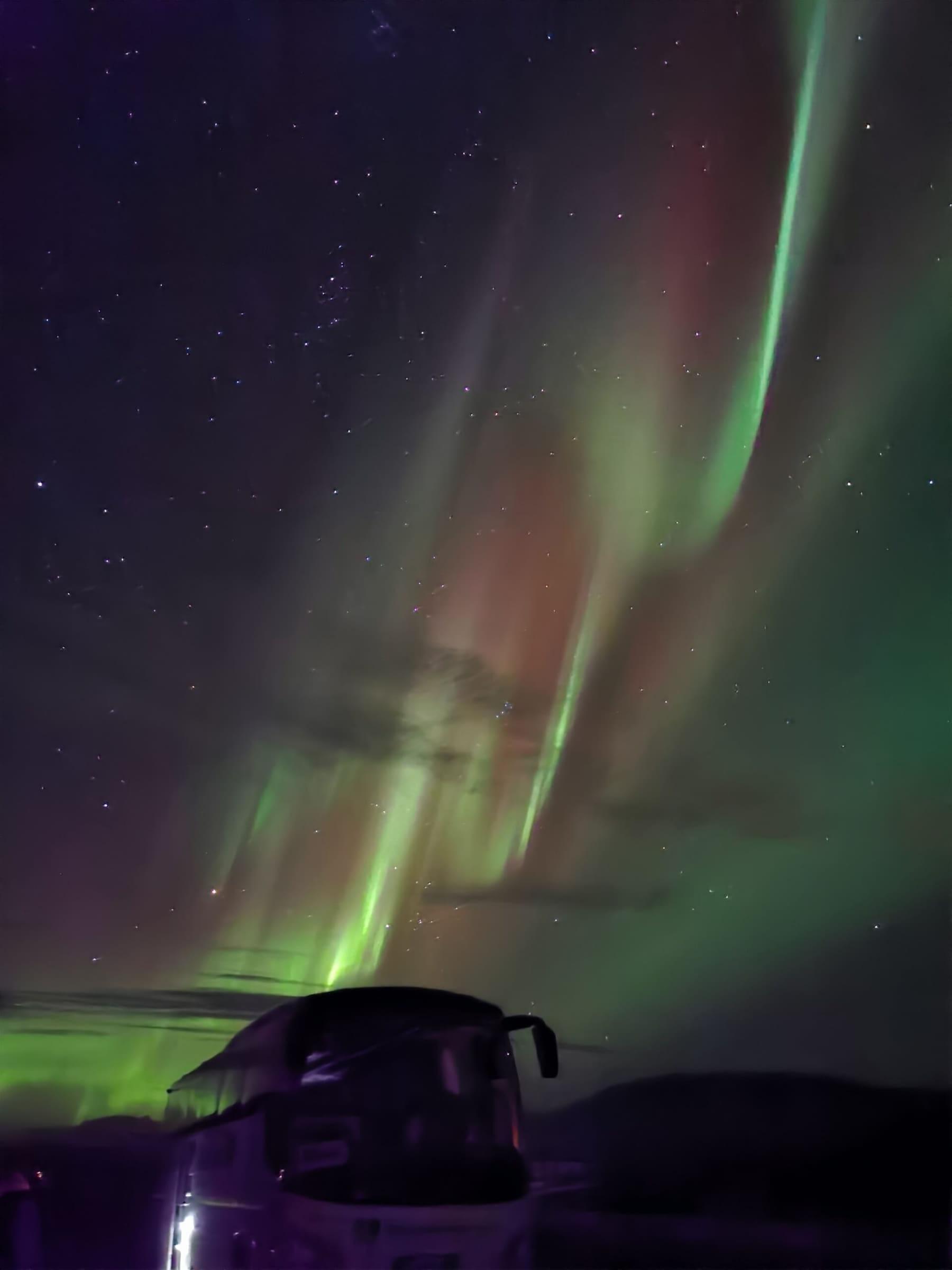
Recent phones do well in night mode on a bright display, as long as the phone is held still or leaned on something. Faint lights often look grey-green to the eye and much greener on camera.
On our tours we can bring tripods and help with camera settings, so the photos come out when the lights show.
On your own, on a bus tour or with a private guide
You can chase the lights yourself with a rental car, the forecast and a lot of patience, though winter roads at night need experience. Bus tours drive a large group to a set area and wait there.
A private tour can follow the clear sky. Our Northern Lights tour runs in a 4×4 SUV, either as a short trip out of Reykjavík or as a longer trip of three to five days in the countryside, away from the city lights, with accommodation booked where the visibility looks best each night.
Northern lights occur mainly 90 to 150 km above the earth, sometimes much higher. Wherever you watch from, you are looking at the same sky, so the only things you can choose are darkness, clear weather and time.
What guests said about the northern lights
TripAdvisor
Based on 149 reviews
Once in a lifetime experience
My tour of Iceland in March was perhaps the best travel experience I have ever had. Our tour guide, Thor, did his utmost to make sure we had the best experience possible. We were able to see the northern lights on three nights and he took fabulous photos and beforehand told us a little bit about science behind the northern light. The accommodations were wonderful, the food was excellent, and in out-of-the-way places, the tour arranged for private meals where there weren’t restaurants. It was wonderful to go in March to see the northern lights and to avoid the crowds from the cruise ships.
Best Tour Guide in Iceland!
Thor will show you whatever you want to see! You can see the highlights and/or go off the beaten path. He will accommodate whatever schedule you have. Five of us did a bit of both and absolutely loved it! We did a 3 night 4 day tour. Thor is extremely knowledgeable about the history and geology of Iceland. He is reasonably priced and we all felt like we had made a new friend. He will go the extra mile to make certain you are happy with your trip! He even picked us up at 10pm to drive away from the city lights looking for the Northern Lights. Stop looking for tours and book Salty Tours to avoid the big coach and canned tours! Thor is undoubtedly the best!
Life changing, beautiful terrain
Traveling Iceland, by itself is life changing! So glad we toured with Saltytours and Thor! We traveled the entire ring of Iceland, the terrain is so beautiful and diverse, everything from lava fields, waterfalls, geysers, glaciers, thermal pools and northern lights. Thor is also an excellent photographer, he knows how to capture the northern lights. He is very knowledgeable and personable, a safe driver who knows his way around. We enjoyed our time in Iceland, Thor was a bonus!
FAQ
Questions about the Northern Lights
When is the best time to see the northern lights in Iceland?
Between September and mid-April, on a dark and clear night. November to February give the most hours of darkness; September, October and March often bring milder weather and active skies around the equinoxes.
Can you see the northern lights from Reykjavík?
Yes, on strong nights, for example from the Grótta lighthouse. City lights hide fainter displays, so a short drive out of town gives a much better chance.
What time of night are the northern lights visible?
Any time it is fully dark, which in midwinter is from late afternoon. Many of the best displays come between about 22:00 and 02:00.
Can you see the northern lights in Iceland in summer?
No. From mid-May to early August the nights are too bright. The season starts again in late August or September.
What Kp index do you need in Iceland?
Iceland lies under the auroral oval, so even Kp 2 or 3 can give a visible display. Clear skies matter more than a high number.
Are the northern lights guaranteed?
No. They depend on the weather and on the sun, so no one can promise them. Staying several nights in the season, and being able to drive to clear skies, gives the best odds.
What should I wear to see the northern lights?
More than you think: thermal layers, an insulated jacket, a hat, gloves and warm boots. You will be standing still outside at night, often for an hour or more.
Contact us for a quote
Contact Us for Personalized Tours
Enjoy a private day tour in Iceland, contact us for a quote today.